
Author: Emily Carter, Asset Management & Reliability Advisor
The lowest-cost maintenance option is not always the lowest-cost decision.
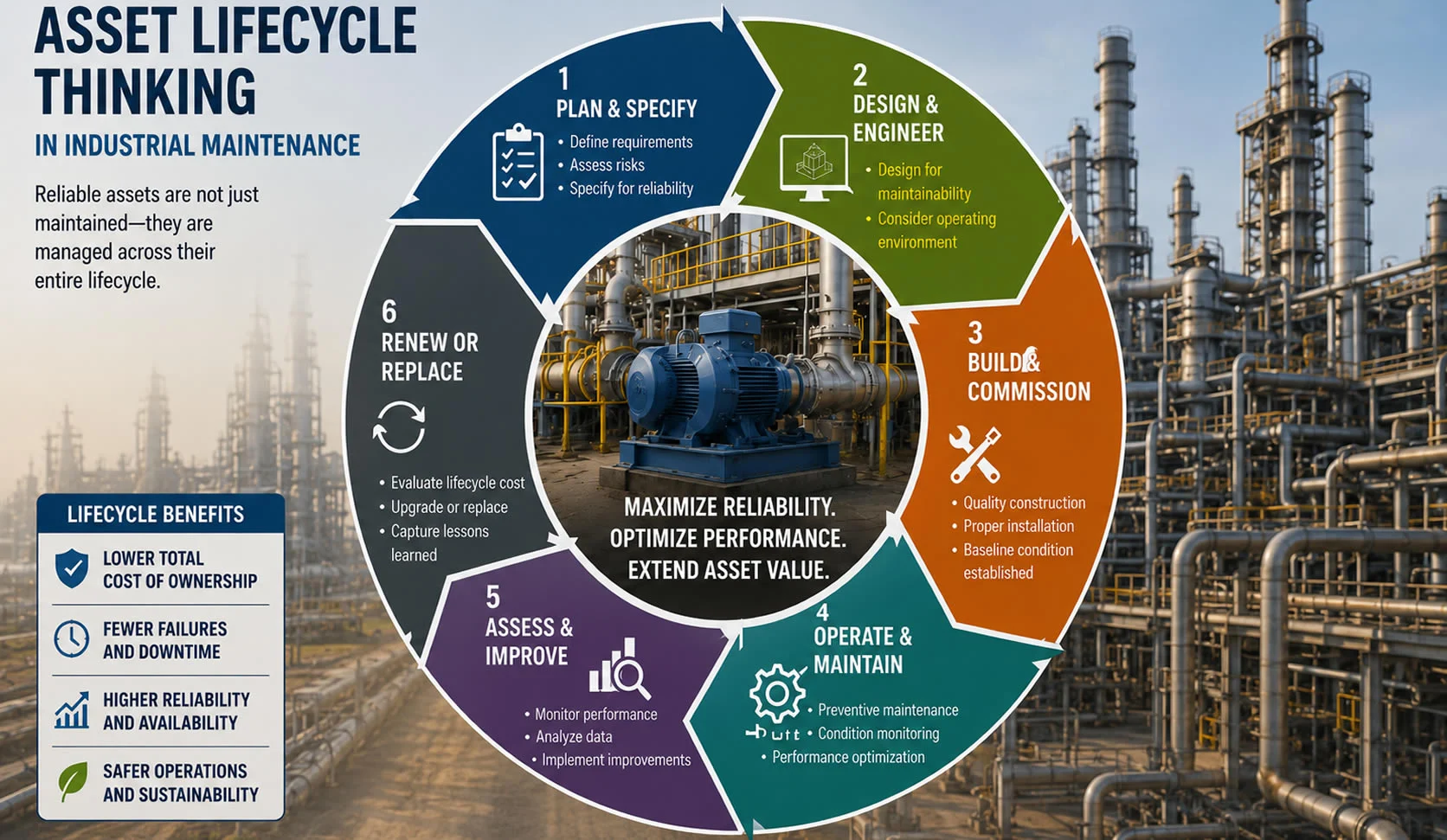
Industrial assets should be evaluated across their lifecycle: acquisition, installation, operation, maintenance, repair, overhaul, and replacement. A product, coating, lubricant, cleaner, or repair method may appear inexpensive at purchase but become costly if it increases labor time, downtime, rework, safety exposure, or replacement frequency.
ISO 55000 establishes principles for asset management and focuses on realizing value from assets across their life cycles.
For maintenance teams, lifecycle thinking changes the decision process.
Instead of asking only, “What does this product cost?” teams should ask:
How long will the repair last?
How often will the asset need intervention?
How much downtime is involved?
What is the safety exposure?
Does the method improve reliability?
Does it reduce repeat failures?
Does it support inspection?
Does it extend service life?
This does not mean selecting the most expensive option. It means selecting the option with the best balance of performance, risk, cost, and operational value.
For example, a cheaper cleaner may require more labor. A low-cost coating may fail early. A poor lubricant may increase wear. A delayed repair may result in emergency downtime. A temporary fix may be appropriate in one case and unacceptable in another.
Lifecycle thinking also supports standardization. When teams understand total value, they can reduce unnecessary product variation and improve consistency in maintenance execution.
Reliability is not only about avoiding failure. It is about making better decisions over the full life of the asset.
Key takeaway: Maintenance decisions should be based on lifecycle value, not only purchase price.