
Author: Rebecca Thompson, MRO Technical Specialist
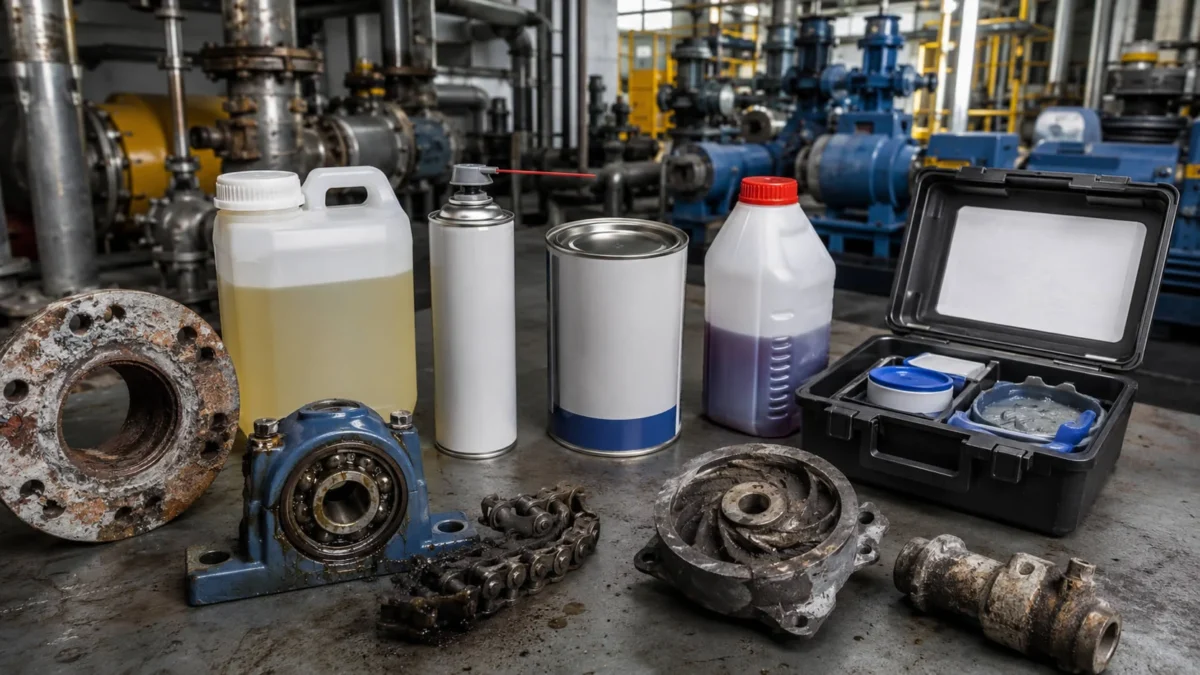
Maintenance chemicals are often selected by category: cleaner, degreaser, lubricant, rust remover, coating, solvent, or repair compound. That approach is simple, but it is not always reliable.
A better method is to select the product by failure mode.
In reliability engineering, every maintenance action should connect to a specific problem. Is the issue contamination, corrosion, friction, wear, leakage, oxidation, chemical attack, carbon buildup, moisture, or poor adhesion?
Each failure mode requires a different response.
A cleaner used before coating must remove contaminants without leaving residues that interfere with adhesion. A degreaser used on mining equipment must address heavy oils, grease, dust, and carbon deposits. A lubricant for open gears must perform under load, exposure, and contamination. A corrosion inhibitor for storage must protect surfaces without complicating later use.
The same product should not be expected to solve every maintenance problem.
A reliability-based product selection process can follow a simple sequence:
Define the asset.
Define the failure mode.
Identify the substrate.
Understand the operating environment.
Determine the application method.
Confirm safety and handling requirements.
Define how success will be measured.
This approach also helps reduce unnecessary product variety. Many plants accumulate too many chemicals because products are added reactively. Over time, teams may have multiple cleaners, solvents, lubricants, and coatings with overlapping uses and unclear application rules.
Standardization improves training, inventory control, safety, and performance.
However, standardization should not mean using one product for everything. It means using the right product for the right failure mode and documenting that decision.
Key takeaway: Maintenance chemicals should be selected by function, failure mechanism, substrate, environment, and application method.